AI Explained: How Neural Networks Mimic the Human Brain
Artificial intelligence (AI) has made incredible strides in recent years, powering everything from voice assistants to medical diagnostics. At the heart of this technological revolution lies a concept borrowed directly from nature: neural networks. But how do these digital systems actually mimic the human brain? Let's unravel the fascinating science behind AI's most brain-like technology.
What Are Neural Networks?
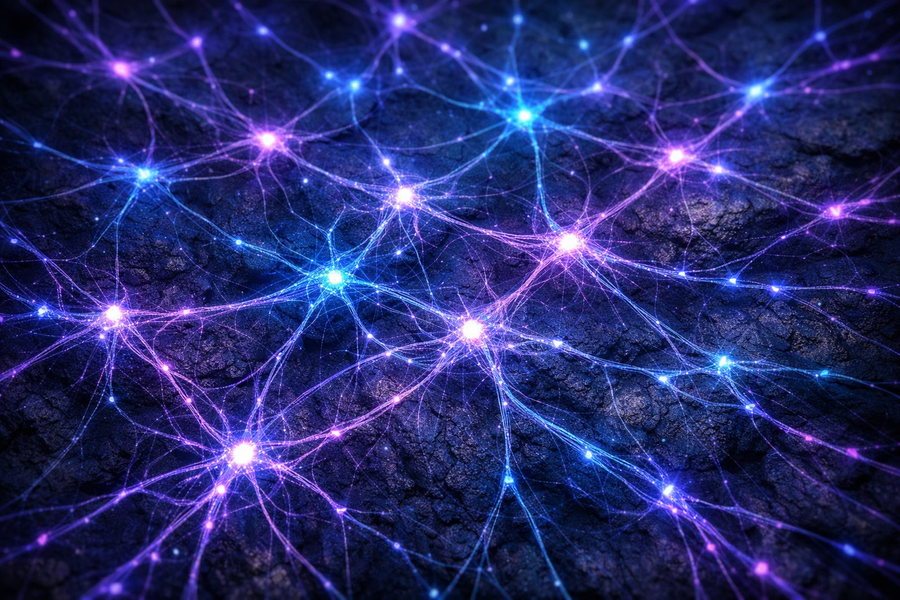
Neural networks are computing systems inspired by the structure and function of the human brain. Just as our brains contain billions of interconnected neurons, artificial neural networks are composed of layers of interconnected nodes—sometimes called "artificial neurons." These nodes work together to process information, recognize patterns, and make decisions.
The Brain vs. Neural Networks: Drawing the Parallels
1. Neurons and Nodes
In the human brain, neurons are specialized cells that transmit information via electrical and chemical signals. In a neural network, nodes serve a similar purpose: they receive input, process it, and pass on the result to other nodes in the network.
2. Connections and Synapses
Neurons communicate through connections called synapses, which strengthen or weaken as we learn. Similarly, nodes in a neural network are linked by weights, which adjust as the network learns from data. This adjustment is what enables AI to improve its predictions over time.
3. Learning and Adaptation
Our brains learn by reinforcing successful pathways and pruning away less useful ones. Neural networks use algorithms like backpropagation to tweak the weights between nodes, reinforcing connections that lead to correct outputs and adjusting those that don't.
4. Layered Structure
The human brain processes sensory input in stages—for example, visual information travels from the retina through several regions before we consciously perceive an image. Neural networks also use layers (input, hidden, and output) to gradually transform raw data into meaningful outputs.
Why Mimic the Brain?
The brain remains the most advanced learning machine we know. By modeling AI after the brain’s architecture, scientists hope to capture its ability to generalize, adapt, and learn from limited examples. Neural networks have already demonstrated impressive capabilities:
- Image and speech recognition
- Natural language processing
- Game playing and strategy
Key Advances: Deep Learning
Deep learning refers to neural networks with many hidden layers—so-called "deep" architectures. These deep neural networks excel at complex tasks like translating languages and identifying objects in images, thanks to their brain-inspired design and powerful data-processing abilities.
Limitations and Future Directions
Despite their strengths, artificial neural networks are far simpler than the human brain. Brains contain about 86 billion neurons, while even the largest AI models only have millions of artificial neurons. Moreover, our brains are far more energy-efficient and capable of creativity, abstract reasoning, and emotional understanding.
However, ongoing research in neuroscience and computer science continues to blur the lines between biological and artificial intelligence. Scientists are exploring more sophisticated neural architectures, hoping to unlock even more brain-like abilities in AI systems.
Conclusion
From image recognition to self-driving cars, neural networks power some of today’s most exciting AI applications. Their remarkable success stems from their brain-inspired design—a digital homage to the most powerful learning organ known to man. As we continue to unravel the mysteries of both artificial and biological intelligence, the future of AI looks brighter (and smarter) than ever.